Major discount retailer, Big Lots, Inc. filed for bankruptcy on September 9, 2024. Importantly, both payment-based (DBT Index) and financial-only based models (Z’’-Score) failed to warn about this company’s bankruptcy risk. Conversely, the FRISK® Score provided warning for more than a year, enabling clients to mitigate their trade credit exposure.

Resources
Stay Ahead With In-Depth Analytics on Public And Private Companies
Struggling with debt and declining sales, ATM and Point of Sale tech manufacturer Diebold Nixdorf, Inc. has filed for Chapter 11 protection. Our subscribers, armed with the FRISK® Score, would have made an early withdrawal before bankruptcy struck.
Updating CreditRiskMonitor’s Confidential Financial Statement Service (CFS) Risk Model has led to higher capture rates of bankruptcy in private companies, with a remarkable upward spike in captures on applicable companies with lower FRISK® scores.
RetailDive recently set out to compile a list of distressed retailers at risk of bankruptcy, using data provided by CreditRiskMonitor's proprietary FRISK® score. In this podcast, author Ben Unglesbee discusses his findings in advance of the 2019 holiday season.
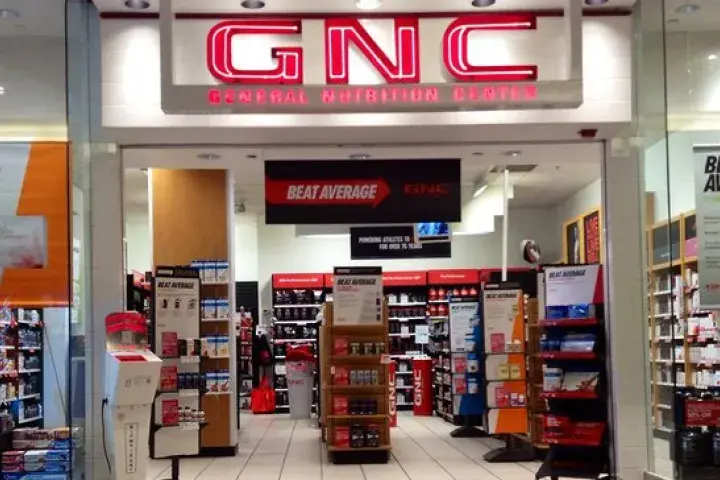
Daphne Howland of Retail Dive reports on the recent store closings of specialty retailer General Nutrition Center (GNC), citing CreditRiskMonitor's FRISK® score as a reliable measure for predicting public company bankruptcy risk.
Powered by crowdsourcing and deep neural network technology, CreditRiskMonitor® uses two proprietary scores – FRISK® and PAYCE® – to more accurately predict financial risk at public and private companies, respectively.
Read in-depth how crowdsourced intelligence is used to enhance the FRISK® Score, increasing both the timeliness and accuracy of the bankruptcy model.
Specialty retailer, The Container Store Group, Inc., filed for bankruptcy on December 22, 2024. The FRISK® Score had signaled the company’s financial distress for 12 consecutive months, providing early warning to subscribers. Yet the company’s Days Beyond Terms Index, a measure of historical trade payment performance, persistently indicated prompt payment behavior. The divergence between these indicators is known as the “Cloaking Effect”.
When WW International (Weight Watchers) filed for bankruptcy, credit professionals relying solely on financial-based models like the Z''-Score did not detect the company’s financial distress. CreditRiskMonitor’s 96%-accurate FRISK® Score – a real-time, hybrid model – flagged WW International’s financial distress well in advance, offering a crucial early warning. This case underscores the power of combining financial data, stock market performance, aggregate insider sentiment, and agency ratings for precise bankruptcy predictions.