✓
Trusted by 40% of Fortune 1000


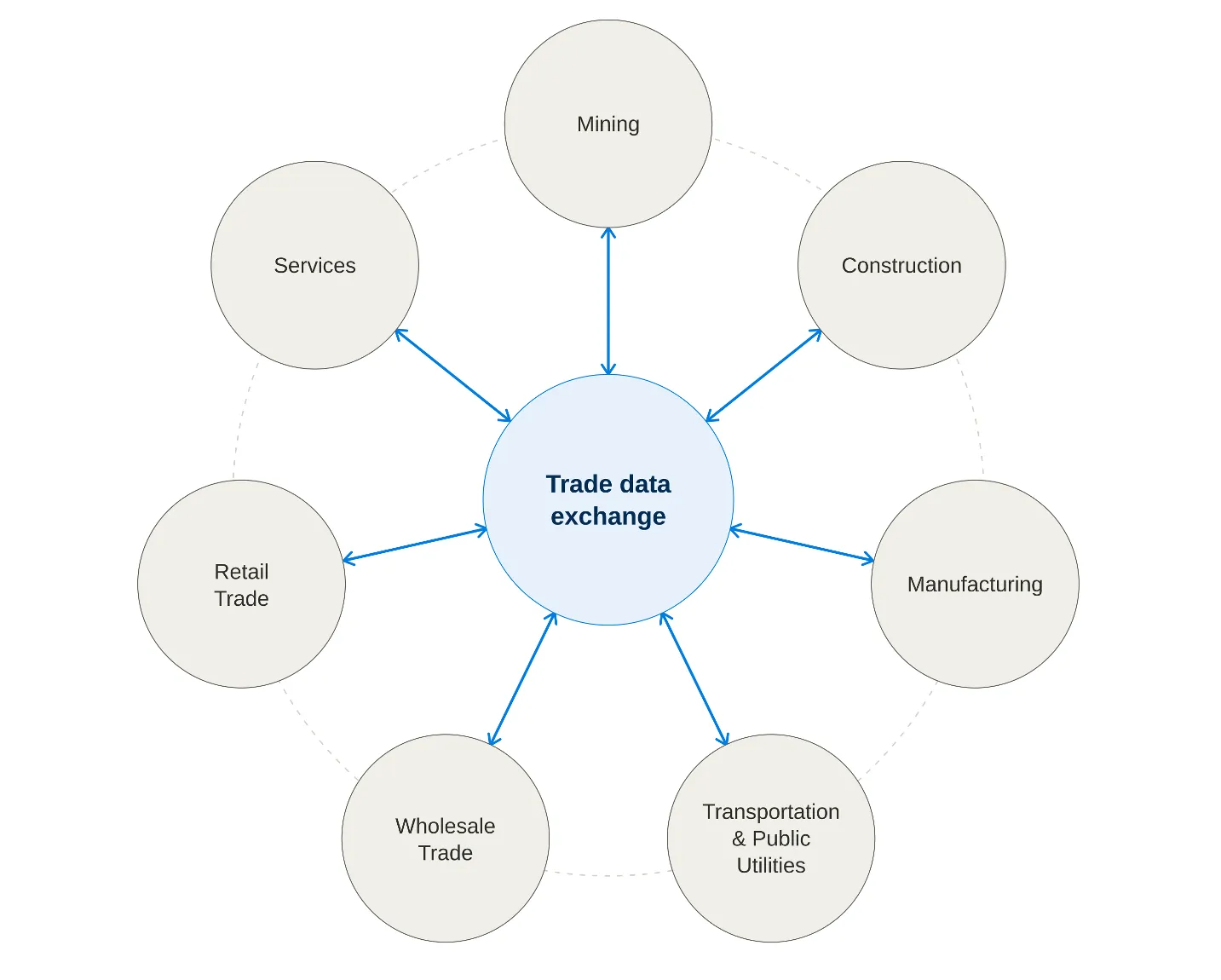
Nearly every organization sits on one of the most valuable yet underrecognized assets: Accounts Receivable (“A/R”). Finance teams track months of payment history, invoice terms, and related information that either never leaves the organization or may only be shared on a limited basis, instead of reaping the benefits from a global trade data exchange program. Trade data exchanges provide access to a wider market of companies extending credit to the same customers, alongside commercial credit reporting insights. Ideal accounts receivable management will use trade data exchange insights to support faster business growth, improved Days Sales Outstanding (DSO), fewer write-offs, and better cash flow.
In this article, we’ll define what is an A/R trade file and what organizations gain when they report this information to trade data exchanges. Additionally, we’ll walk through the guardrails that keep external sharing safe, the business impact of trade credit, and the real-world benefits of integrating these insights into your internal systems.
Here’s What We’ll Cover
- What is Accounts Receivable and an A/R Trade File?
- Where Trade Data Sharing Pays Off
- Guardrails: Confidentiality and Data Protection
- What’s the Impact of Trade Credit?
- Real Benefits of A/R Trade System Integrations
- Final Thoughts
What is Accounts Receivable and an A/R Trade File?
Accounts receivable is the function that turns delivered work into collected cash. It covers invoicing customers, applying each incoming payment to the right invoice, and chasing money owed on past-due accounts. It also covers reconciling what gets collected against the company’s books, so finance always knows the real accounts receivable position.
Accounts receivable and accounts payable come down to cash flow direction: receivables are money owed to your business, while payables are money you owe to others. Classified as current assets on the balance sheet, receivables directly enhance short-term liquidity. Concrete examples include an unpaid invoice with trade terms (such as “2/10 Net 30”), a balance owed for delivered goods, or billed services awaiting customer payment.
Standard payment terms can be written as “2/10 Net 30” or “2/10 Net 60,” giving customers a discount for paying early and a fixed number of days to pay the outstanding balance. Accounts receivable can serve as collateral for a loan, since a lender can treat a company’s book of receivables as a source of funds, or advance cash directly against unpaid invoices still moving through collections.
The accounts receivable turnover ratio measures the average number of days it takes to collect. It’s one of the clearest signals of how well a company’s collection processes perform, and a useful benchmark when comparing receivables management and reporting across clients or business units.
Aggregated accounts receivable is the A/R trade file, or the standardized record of the company’s payment experience across all its customers. It will include the customer name, account number, address information, current amount owed, past due aging buckets (1-30 days, 31-60 days, etc.), currency, and total amount, among other information including their credit balance, credit limit, years sold, payment terms, high credit limit, last sale, and more. When a business submits its A/R trade file to a trade data exchange, that file becomes one input in a much larger picture of how customers pay across every company that reports on them.
Where Sharing Trade Data Pays Off
There are five important reasons why organizations should share their A/R trade file with trade data exchanges:
1. Faster, More Informed Credit Decisions
Faster credit decisions happen when credit management teams are confident that they have a fuller picture of the receivables risk posed by customers, and trade data exchanges return an analysis of what others report about those same customers while protecting the anonymity of those reporting companies.
That trade data exchange visibility, among its clearest benefits, supports stronger credit risk management, defensible credit limits, and can advance decisions on new credit lines.
2. Lower DSO and Stronger Cash Flow Forecasting
A A company’s own invoice records only show how a customer pays that company. Payment reports from a trade data exchange reveal how the same customer pays everyone else, surfacing accounts that look healthy internally but are stretching terms across the market. The underlying measure is Days Beyond Terms (DBT), which is the average number of days past the agreed due date that a company settles its invoices.
That external view does two things. Collections teams can prioritize the accounts most likely to slip, pulling down Days Sales Outstanding and freeing up working capital. And because forecasts are built on how customers actually pay rather than when invoices are nominally due, projected collections land closer to reality.
3. Earlier Identification of High-Risk Accounts
Sending receivables information to the trade data exchange will reveal risk by account, specifically by identifying high-, medium-, and low-risk customers, through predictive risk scores and ratings. Accuracy of the predictive model depends on both the quality of available data (financials, payment history, firmographics, alternative data) and the specific AI techniques applied. Importantly, historical payment summaries can fail to identify high-risk accounts, which reinforces the need for predictive analytics.
The average customer portfolio holds a relatively smaller population of genuinely high-risk accounts, and that cohort represents a disproportionate share of a company’s total accounts receivable write-offs and cash flow losses. Flagging those accounts early, and routing that flag straight into the system finance teams already use, is what turns a risk insight into fewer write-offs and better collection outcomes.
4. Better Collaboration Across Teams
Reporting to a trade data exchange and sharing these actionable insights internally across teams (e.g., sales, customer service, credit, collections, finance) provides a deeper understanding of customers.
Additionally, sharing a customer’s payment history across teams helps set realistic payment terms for that customer, rather than defaulting to the same terms for every customer. Credit professionals may choose to tighten terms when a customer’s payment performance slows, and conversely, provide favorable terms when payment performance improves.
Collection efforts also improve when internal teams share information. The individual who knows an invoice is overdue can provide context instead of leaving collections to chase it separately. Collaboration with revenue teams to tailor deals and targets can help improve cash conversion cycles. It’s also helpful to understand if the account is high-risk, i.e., its bankruptcy potential, or if other trade creditors are being paid promptly.
5. Industry-Wide Transparency and Emerging Trends
Beyond one company’s walls or a credit group, participating in a broader-based trade exchange program (or even multiple programs) provides the best transparency across the wider market of companies extending credit and managing receivables.
When companies across industries contribute payment records into the trade data exchange, patterns emerge that no single accounts receivable team could see on its own. That can include which customers are stretching receivables terms, which sectors are slowing payment, and if suppliers are cutting off trade credit to a customer. This reporting helps identify emerging risk as well as growth opportunities in the broader market and for specific customers.
Organizations strongly prefer selling to low-risk, or financially sound customers that will endure over time. To appropriately increase exposure with these growth accounts, companies align past max credit levels and trade averages alongside their organization’s risk tolerance.
Guardrails: Confidentiality and Data Protection
Confidentiality and data protection laws limit what a company can report about its receivables, and those limits are fixed. In practice, companies report customer payment behavior rather than commercially sensitive contract terms such as pricing, since disclosing those could harm the customer or hand an advantage to a competitor. Provider information is anonymized, though it retains clear sector classifications so trade can be analyzed by supplier type.
Choosing a trade data exchange with recognized data security certifications is an important requirement. SOC 2 compliance, for example, means an independent auditor has verified the exchange’s controls around data security, availability, process integrity, confidentiality, and privacy over an extended period. Before contributing sensitive payment records, your organization should confirm the exchange it’s working with holds current, verifiable certifications rather than taking security claims at face value.
Any accounts receivable team building a sharing program should map these boundaries and get management sign-off before the first receivables record moves through shared processes.
What’s the Impact of Trade Credit?
According to Federal Reserve data, U.S. nonfinancial corporate trade receivables and payables reached $6 trillion and $4.5 trillion in 2026, respectively, highlighting the massive scale of these working capital line items. Yet managing this exposure comes at a heavy price: receivable write-offs, partially driven by customer bankruptcies, shave off several percentage points and cost organizations billions each year.
Turning to accounts receivable specifically, this asset is not simply cash yet to be collected. It can be financed, sold, or advanced against, turning outstanding invoices into working capital a company can use immediately to fund the business. That flexibility is one reason receivables carry real weight with investors and lenders evaluating a business’s financial health. A steady, well-managed book of receivables with few bad debts is one of the clearer benefits of goods delivered but not yet paid for, signaling a company that gets paid reliably.
Another advantage is that offering generous credit terms can win sales in highly competitive industries, and carrying receivables is the cost of extending that advantage to a buyer who might otherwise take their business elsewhere.
Real Benefits of A/R Trade System Integrations
A trade data exchange’s reporting insights can integrate inside the systems your team already works in. Pushing these analytics directly into an ERP or a related Accounts Receivable Software system gives credit and collection professionals the same visibility on every account.

That visibility matters most for two important scenarios a company’s own ledger can miss. The first is the account heading toward real financial trouble: the exchange can flag a customer showing signs of severe bankruptcy risk. The second is the hidden slow payer, a customer that pays you on time, while paying most other creditors slowly. On your company’s own ledger, that customer looks fine. Only a trade data exchange’s aggregated view, built from what many companies report at once, surfaces the pattern, which is exactly why it’s such an important cohort for a credit or collections team to monitor.
Final Thoughts
Organizations already track invoices, payment dates, aging buckets, and related information. Reporting this data to a trade data exchange and putting reliable risk and payment benchmarks into your internal system will drive faster credit decisions, fewer write-offs, and stronger cash flow. Whether an organization operates in one country or across many, the job is same: extend credit to drive growth, collect what’s owed, and mitigate risk at the right time.
Trade data exchanges with verified data security compliance are the right path to access customer risk insights and payment experiences. If your team already shares A/R trade files, explore how you can contribute to CreditRiskMonitor’s Trade Contributor Program. What sets the program apart is its powerful network effect, aggregating $3 trillion in global payment data with real-time bankruptcy insights designed to strengthen your business.
Sources
American Institute of CPAs (AICPA). System and Organization Controls (SOC) Suite of Services. https://www.aicpa-cima.com/resources/landing/system-and-organization-controls-soc-suite-of-services
Board of Governors of the Federal Reserve System (US). Nonfinancial Corporate Business; Trade Receivables; Asset, Level [TRABSNNCB], retrieved from FRED, Federal Reserve Bank of St. Louis. https://fred.stlouisfed.org/series/TRABSNNCB
Board of Governors of the Federal Reserve System (US). Nonfinancial Corporate Business; Trade Payables; Liability, Level [TPLBSNNCB], retrieved from FRED, Federal Reserve Bank of St. Louis. https://fred.stlouisfed.org/series/TPLBSNNCB